
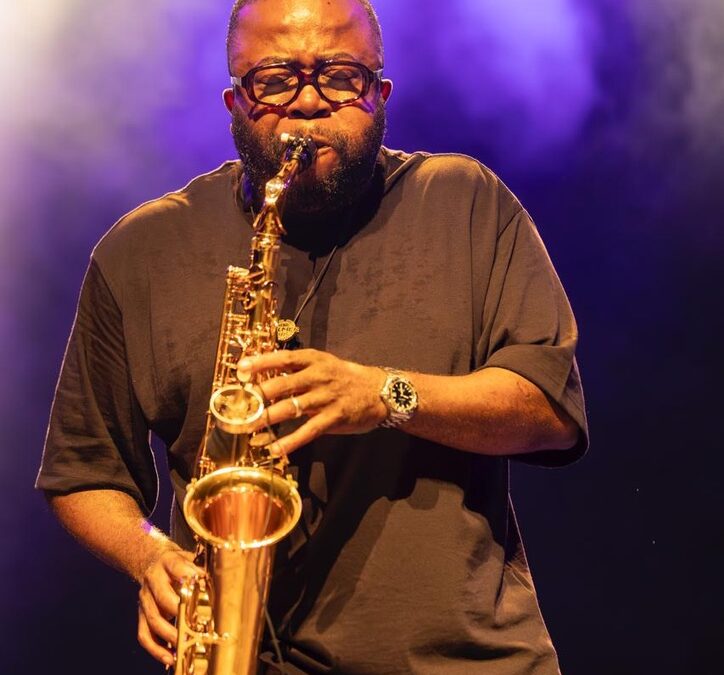
When I speak about Jazz from Africa, I am talking about much more than a geographical description. I am talking about identity, heritage, rhythm, language and the stories that we carry with us as African musicians.
Jazz has always been a music of movement, conversation and freedom. Its roots are deeply connected to Africa, and today, across our continent, musicians are continuing that conversation in extraordinary and very individual ways.
For me, growing up in Mozambique has shaped everything about the musician I am. The rhythms, languages, traditions and sounds of my country are part of my musical DNA. When I pick up my saxophone, I don’t have to consciously try to sound African or Mozambican. It is simply who I am.
And that is what excites me about the jazz genre from the African continent.
There is no single African jazz sound. A musician from Maputo brings a different story from someone in Cape Town, Lagos, Nairobi, Dakar or Addis Ababa. We have different rhythms, cultures, languages and histories, but we are connected by a continent overflowing with musical creativity.
African Jazz is not a footnote to somebody else’s jazz story. We are part of the story.
We need more African musicians on international stages, more African voices involved in programming and decision-making, and stronger bridges between musicians, festivals, promoters and audiences across Africa and the rest of the world.
To be a jazz musician from this continent, to me, is therefore both a celebration and a responsibility: to honour where we come from, to create something relevant to the world we live in today, and to make sure the next generation of African musicians has an even bigger platform from which to tell its stories.
Our music is local. Our music is African. And our music belongs on the world stage.
— Moreira Chonguiça